AI Shubka
  • Home
No Result
View All Result
AI Shubka
  • Home
No Result
View All Result
AI Shubka
No Result
View All Result
  • Home
  • Affiliate & Tool Guides
  • AI & Future Tech
  • AI Learning & Tutorials
  • Business & Digital Strategy
  • Gadgets & Reviews
  • Motivation & Personal Growth
Machine learning could cut lithium-ion battery testing costs • The Register

Machine learning could cut lithium-ion battery testing costs • The Register

ShubkaAi by ShubkaAi
February 8, 2026
in AI & Future Tech, AI breakthroughs (GPT updates, generative models), Best AI tools for creators, Robotics & automation, Tech forecasts
0
585
SHARES
3.2k
VIEWS
Summarize with ChatGPTShare to Facebook


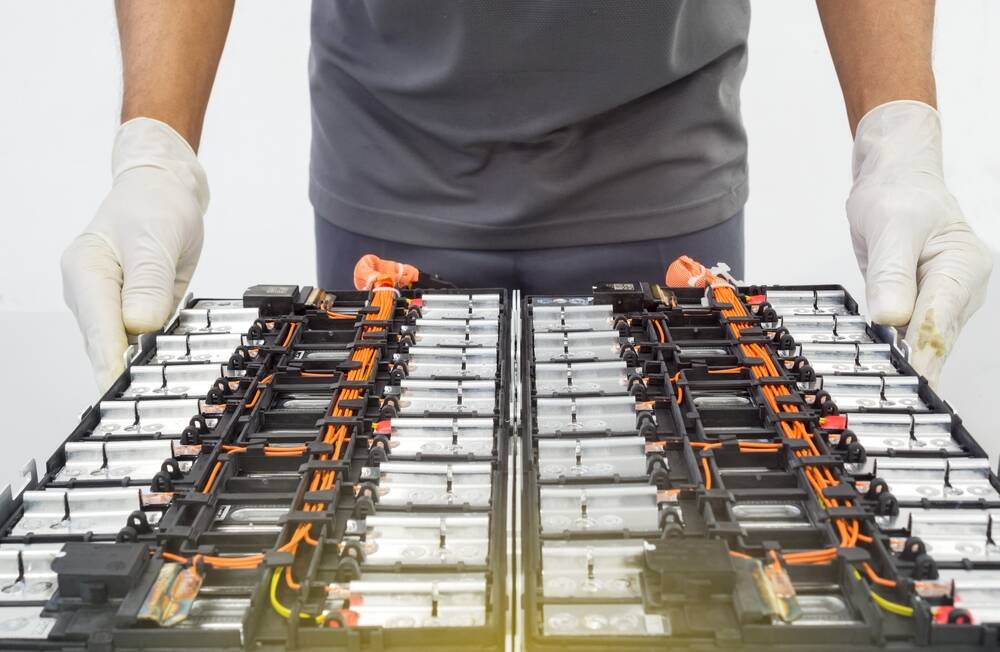
Scientists have developed a machine learning method that could dramatically slash the cost and energy required to develop new lithium-ion batteries that the modern world is becoming increasingly reliant.

Predicting a new battery design’s lifesapn – and its engineering applications – is a major industry bottleneck. Brute-force testing of prototypes by repeatedly charging and discharging until they near their end-of-life threshold can take months or even years, consuming vast amounts of electricity at huge cost.

One study estimated that current and future lithium battery designs might require 130,000 GWh in energy from 2023 until 2040 if no changes were made to the development process. That’s roughly half the annual electricity generated in California (278,338 GWh).

Research published in the scientific journal Nature this week describes a new approach to machine learning in battery development which the authors claim could save 98 percent of the time and 95 percent of the cost compared to conventional methods.

It shows a “great potential for tackling a key bottleneck in battery development,” University of Connecticut associate professor Chao Hu said in an accompanying article.

The process developed by University of Michigan postdoctoral researcher Jiawei Zhang and his team combined iterative elements to reduce the data required to make accurate predictions.

The so-called Discovery Learning framework builds on a 2019 study that showed a machine learning model exploiting early-life data from prototype battery testing could be used to predict battery lifetimes with less than 15 percent mean error on test sets, considered highly accurate.

Zhang and colleagues split the earlier method into three distinct elements. A Learner module picks prototypes of new designs likely to offer useful data to improve predictive accuracy. After early testing of these prototypes, the Interpreter module employs models of physical properties to analyze this data together with historical full-life data from existing batteries. Lastly, the Oracle module uses that output to predict the lifetimes of the newly tested prototypes. Crucially, that information is then fed back into the Learner module for selecting the next set of prototypes to physically test.

“A key novelty of the Discovery Learning model is that it updates itself using lifetimes predicted by the Oracle, rather than by using experimentally measured lifetimes, avoiding the need for time-consuming full-life battery testing,” Hu said.

However, he points out that it remains unclear how well the Discovery Learning framework will perform when a new battery design deviates substantially from those of the batteries that are available to provide training data.

“More broadly, before the framework can be adopted for general use, further validation is needed to see how well it holds up for batteries used in real-world conditions, for example, at variable temperatures and under different electrical loads,” Hu said.

Nonetheless, with the current global value of batteries for EVs, laptops, and a spectrum of other applications worth $120 billion – and expected to increase to nearly $500 billion in 2030 – even slight savings in development costs could make a difference. ®




Source link

SummarizeShare234
ShubkaAi

ShubkaAi

Related Stories

Reddit on the rise: What is it and why is AI search popularising it?

Reddit on the rise: What is it and why is AI search popularising it?

by ShubkaAi
March 1, 2026
0

If you do a Google search nowadays, you no longer see a list of links at the very top. Instead, you see a summary of search results curated...

Share values of property services firms tumble over fears of AI disruption | AI (artificial intelligence)

US military reportedly used Claude in Iran strikes despite Trump’s ban | AI (artificial intelligence)

by ShubkaAi
March 1, 2026
0

The US military reportedly used Claude, Anthropic’s AI model, to inform its attack on Iran despite Donald Trump’s decision, announced hours earlier, to sever all ties with the...

Can ‘friction-maxxing’ fix your focus?

Can ‘friction-maxxing’ fix your focus?

by ShubkaAi
March 1, 2026
0

Thrilled by his initial success, the artist has now traded the instant gratification of Instagram for longer and more meaningful interactions on Substack, takeaways for home-cooked meals and...

SaaS-pocalypse isn’t coming any time soon • The Register

SaaS-pocalypse isn’t coming any time soon • The Register

by ShubkaAi
March 1, 2026
0

Opinion Say goodbye to the SaaS-pocalypse theory, which posits that advances in AI will bring the software-as-a-service market to its knees. Say hello to "a feedback loop with...

Next Post
Client Challenge

Client Challenge

Leave a Reply Cancel reply

Your email address will not be published. Required fields are marked *

Ai Shubka

AI-Shubka | Smarter Business. Automated Future. Helping entrepreneurs and creators earn more with AI tools, automation, and digital strategy.

Follow us

Recent Posts

On the Future of Species — unnatural selection – Financial Times

On the Future of Species — unnatural selection – Financial Times

March 1, 2026
New to Claude? Use these 6 simple starter prompts to unlock better answers instantly

New to Claude? Use these 6 simple starter prompts to unlock better answers instantly

March 1, 2026

Weekly Newsletter

© 2026 aishubka - Smarter Business. & Automated Future. by aishubka.

Powered by
►
Necessary cookies enable essential site features like secure log-ins and consent preference adjustments. They do not store personal data.
None
►
Functional cookies support features like content sharing on social media, collecting feedback, and enabling third-party tools.
None
►
Analytical cookies track visitor interactions, providing insights on metrics like visitor count, bounce rate, and traffic sources.
None
►
Advertisement cookies deliver personalized ads based on your previous visits and analyze the effectiveness of ad campaigns.
None
►
Unclassified cookies are cookies that we are in the process of classifying, together with the providers of individual cookies.
None
Powered by
No Result
View All Result
  • Home
  • Affiliate & Tool Guides
  • AI & Future Tech
  • AI Learning & Tutorials
  • Business & Digital Strategy
  • Gadgets & Reviews
  • Motivation & Personal Growth

© 2026 aishubka - Smarter Business. & Automated Future. by aishubka.